
 Virtual bookkeeper, Australia
A virtual bookkeeper does the work of an office bookkeeper online, inside your own Xero, MYOB, QuickBooks or Reckon file. With FreeMyCloud that is one dedicated, university-qualified graduate accountant, working Australian business hours, who typically costs 50 to 70% less than a local equivalent. No lock-in contract and no setup fee.
The short answer
A virtual bookkeeper is a bookkeeper who works remotely, through your cloud accounting software, and never needs a desk at your premises. The same role is also called an online bookkeeper or a remote bookkeeper. They code transactions, reconcile bank and card accounts, enter supplier bills, send and chase invoices, prepare pay runs, and prepare the reports and BAS figures your registered agent relies on.
A virtual bookkeeper is a person, and that is the difference from bookkeeping software. The software records what it is given. The bookkeeper decides how each transaction is coded, follows up the missing receipt and notices when a number looks wrong.
The arrangement works because bank feeds, photographed receipts and emailed bills already arrive in digital form. If the documents reach the file online, the person keeping the file can be anywhere.
How it works day to day
| Document | How it arrives | What your bookkeeper does with it |
|---|---|---|
| Bank and card transactions | A bank feed into your accounting software | Codes each one and reconciles the account |
| Supplier bills | Forwarded to a bills email address, or sent by the supplier directly | Enters the bill, attaches the document and schedules it for your approval |
| Receipts | Photographed on a phone with your software’s app or a receipt tool | Matches the receipt to the transaction |
| Sales invoices | Raised in your accounting or job software | Sends invoices and statements, and follows up overdue accounts |
| Timesheets and leave | Entered by staff or a manager in your payroll software | Prepares the pay run, the Single Touch Payroll report and the super payment for approval |
| Questions | Email, phone or your team chat | Answers during Australian business hours |
Records can be stored digitally. The ATO requires that they are stored in a way that protects the information from being changed, that most are kept for 5 years, and that they are in English or easily converted to English (ATO, Overview of record-keeping rules for business, last updated 18 June 2026).
Scope
One person, working in your software and following your processes, covering the bookkeeping a business needs every week.
Every transaction coded against your chart of accounts, with the receipt or bill attached.
Bank, credit card and merchant accounts reconciled on a set schedule, with differences followed up.
Supplier bills captured, coded and scheduled so nothing is paid twice or missed.
Invoices sent, statements issued and overdue accounts followed up each week.
Pay runs, Single Touch Payroll reports and super payments prepared for your approval.
Profit and loss, balance sheet and cash flow each month, with the notes that explain the movements.
Also available: BAS preparation for your registered agent, software setup, and catch-up work on books that have fallen behind.
Get in touch
Tell us a little about your business and what you need looked after. We reply within one business day, Australia-wide, and fifteen minutes on the phone is enough to say whether a dedicated bookkeeper suits you and what it would cost.
Prefer to talk? 1300 66 88 14
Choosing an arrangement
| Software alone | On-site bookkeeper | Dedicated virtual bookkeeper | |
|---|---|---|---|
| Who does the work | You, in the evenings | An employee or visiting contractor | The same graduate accountant every day |
| Where | Wherever you are | Your premises | Online, inside your software |
| Paper and cash | You handle it | Handled on site | Needs to be photographed or scanned first |
| What you pay for | A software subscription and your own time | Wages and on-costs, or an hourly rate | A monthly fee. No setup fee, no lock-in contract |
| Suits | A few transactions a month | Cash handling, paper files, front desk duties | Steady weekly volume that arrives in digital form |
When a virtual bookkeeper is not the better choice. If your records are on paper that never gets scanned, if cash is counted on site, or if the bookkeeper also runs the front desk, someone on your premises will suit you better. If you have a handful of transactions a month, the software and an hour of your own time may be enough.
Who does what
People searching for a virtual accountant or an online accountant often want two different things: someone to keep the books each week, and someone to lodge the BAS and the tax return. They are separate roles. Only a registered BAS agent or tax agent can provide BAS services for a fee in Australia (Tax Practitioners Board, BAS services). FreeMyCloud is not a registered tax agent and does not prepare or lodge tax returns.
| Role | Registration | What they do |
|---|---|---|
| Your FreeMyCloud bookkeeper | A graduate accountant working under the direction of your registered agent | Keeps the records current every week and prepares figures and workpapers |
| Registered BAS agent | Registered with the Tax Practitioners Board | Reviews and lodges your BAS, and advises on GST and PAYG obligations |
| Registered tax agent (your accountant) | Registered with the Tax Practitioners Board | Prepares tax returns and year-end accounts, and gives tax advice |
Your accountant stays your accountant. For a fuller explanation see Bookkeeper, BAS agent or accountant: who does what in Australia.
Security and control
Your bookkeeper logs in to your own accounting file with a user account you create. You choose the permission level and you can remove access at any time. Your data stays in your accounting software.
Every engagement starts with a signed non-disclosure agreement. Changes made in the file are recorded against the user who made them, so you and your accountant can see who did what and when.
There is no need to change platforms. FreeMyCloud bookkeepers are able to work with Xero, MYOB, QuickBooks, Reckon, or the accounting software your industry uses.
Whichever platform your business already uses.
Job management, practice management and point of sale systems that feed your accounts.
Approvals, payment runs and reporting dates stay as you have set them.
User permissions set by you, removable by you, with a signed NDA in place.
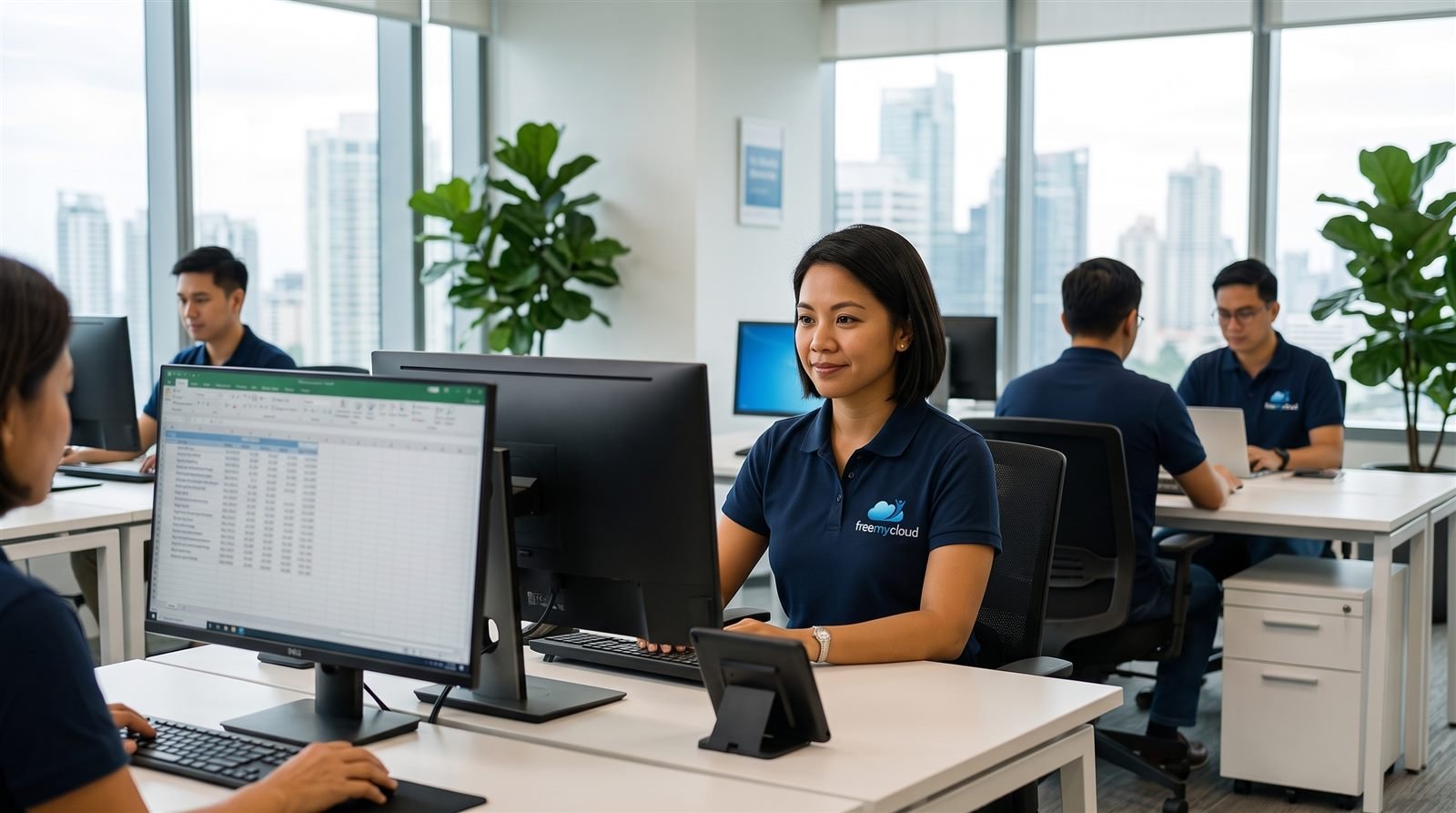
Your bookkeeper is a university-qualified graduate accountant with Australian experience, employed by FreeMyCloud and based in our Manila office. The same person works on your file every day.
FreeMyCloud is Australian owned and was founded in 2010. We work with Australian businesses from sole traders and individual operators to ASX-listed companies, with offices in Melbourne and Manila.
A dedicated FreeMyCloud bookkeeper typically costs 50 to 70% less than a local equivalent. The figure for your business depends on hours and transaction volume, and the cost page sets out how it is worked out.
Getting started
Most clients are running within three business days of the first call.
You describe the business, the software and the work that needs doing.
We match a graduate accountant to your software and workload.
The NDA is signed and you invite your bookkeeper into your file.
Your bookkeeper follows your existing process from the first day.
By software and industry
FreeMyCloud has provided virtual bookkeeping services to Australian businesses since 2010. Because the work is done inside your cloud accounting file, it makes no difference whether your business is in a capital city or a regional town.
Clients range from sole traders and individual operators to ASX-listed companies, across trades and construction, medical and dental practices, NDIS and aged care providers, hospitality, legal practices and real estate agencies.
Your bookkeeper is based in the Philippines. Our guide to outsourced bookkeeping from the Philippines explains how the arrangement works in practice.
Frequently asked questions
A virtual bookkeeper is a bookkeeper who works remotely through your cloud accounting software. They do the same work as an office bookkeeper: coding transactions, reconciling accounts, entering bills, sending invoices, preparing pay runs and preparing reports. The role is also called an online bookkeeper or a remote bookkeeper.
A virtual bookkeeper keeps the records current every week. An online accountant, in the sense most people mean, is a registered tax agent who prepares and lodges tax returns and gives tax advice. FreeMyCloud provides the first. Your own registered agent provides the second, working from the file your bookkeeper keeps.
A dedicated FreeMyCloud bookkeeper typically costs 50 to 70% less than a local equivalent. There is no setup fee and no lock-in contract. The figure depends on the hours and transaction volume your business needs. The cost page explains how it is worked out and the savings calculator gives an estimate.
Bank and card transactions arrive through the bank feed in your accounting software. Bills are forwarded to a bills email address. Receipts are photographed on a phone. Your bookkeeper matches each document to its transaction and follows up anything missing.
Only a registered BAS agent or tax agent can provide BAS services for a fee in Australia. Your FreeMyCloud bookkeeper keeps the records current and prepares the BAS figures and workpapers. Your registered agent reviews them and lodges.
Your bookkeeper works inside your own accounting file using a user account you create, at the permission level you choose. You can remove access at any time. Every engagement begins with a signed non-disclosure agreement, and changes in the file are recorded against the user who made them.
FreeMyCloud bookkeepers are based in the Philippines, in our Manila office. They are university-qualified graduate accountants with Australian experience and they work Australian business hours. FreeMyCloud itself is Australian owned, founded in 2010, with an office in Melbourne.
No. FreeMyCloud bookkeepers are able to work with Xero, MYOB, QuickBooks, Reckon, or the accounting software your industry uses.
Most clients are running within three business days of the first call. The steps are a 15-minute call, matching a bookkeeper to your software and workload, signing the NDA and inviting your bookkeeper into your file.
This page is general information about bookkeeping arrangements and Australian reporting obligations, current as at 29 September 2026. It is not tax, financial or legal advice. FreeMyCloud is not a registered tax agent and does not prepare or lodge tax returns. Rates, thresholds and dates change. Confirm your own position with your registered tax or BAS agent.
Fifteen minutes on the phone is enough to tell you whether a dedicated online bookkeeper suits your business and what it would cost.