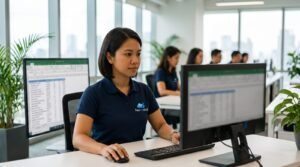


Outsourced bookkeeping from the Philippines means a qualified bookkeeper in Manila or elsewhere in the Philippines works in your Xero, MYOB or QuickBooks file through the access you give them, while you or your registered agent still lodge with the ATO. Australian businesses use it to get the books done every week without hiring locally. This guide covers why the Philippines, what can be outsourced, cost, security and getting started. To see the process step by step, read how outsourcing your bookkeeping to the Philippines works.
Why the Philippines?
The Philippines is a long-standing base for outsourced accounting and bookkeeping work, and for good reason. Filipino accounting professionals typically hold degrees in accounting or finance. English is an official language of the Philippines, alongside Filipino, and is used in schools and business, so communication is clear and professional from day one.
Beyond qualifications, there’s a strong cultural alignment with Australian work standards. Filipino professionals are known for their diligence, attention to detail, and commitment to accuracy: qualities that matter enormously when someone is managing your books.
Prefer to talk it through? Call 1300 66 88 14 or send us an enquiry. We reply within one business day.
The Cost Advantage Is Real
Hiring a full-time, in-house bookkeeper in Australia costs about $65,000 to $85,000 a year once super, leave and management time are added (see what a bookkeeper costs). Outsourcing the same role to a graduate accountant in the Philippines costs a fraction of that, and the work is still done in your own accounting software where you can check it.
For small and medium businesses, these savings can be redirected into growth, whether that’s hiring a salesperson, investing in marketing, or simply improving cash flow. Use our savings calculator to see exactly how much your business could save.
What Can Be Outsourced?
Many Australian business owners are surprised by how much of their day-to-day accounting can be handled remotely by a virtual bookkeeper. Common tasks include:
- Bank reconciliation and transaction coding in Xero, MYOB or QuickBooks
- Accounts payable and receivable management
- Payroll processing
- Monthly financial reporting and BAS preparation support
- Cash flow monitoring and forecasting
With cloud-based accounting software like Xero now standard across Australian businesses, a bookkeeper in the Philippines has exactly the same access and visibility as someone sitting in your office.
Compliance and Security
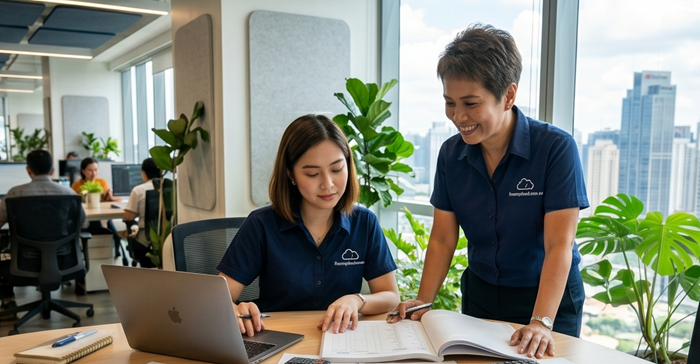
A common concern among business owners is whether outsourcing means compromising on compliance or data security. The short answer is no, provided you work with an established, professional provider. Reputable outsourced bookkeeping firms operate under strict data handling protocols, use secure cloud infrastructure, and ensure their teams are trained in Australian tax and compliance requirements including GST, BAS, and Single Touch Payroll.
Cloud-based platforms like Xero and MYOB store data on Australian or internationally compliant servers, and your offshore bookkeeper accesses those systems with the same role-based permissions you’d grant any contractor. You control what they can see and do, and you can revoke access instantly if needed.
Lodging stays with you. Only a registered BAS or tax agent can provide BAS services for a fee (Tax Practitioners Board), so your offshore bookkeeper prepares the figures and you or your registered agent lodge. This is no different from using a local bookkeeper.
Getting Started Is Easier Than You Think
The transition to outsourced bookkeeping doesn’t require a complete overhaul of how you work. Most FreeMyCloud clients are running within 3 business days: a 15-minute call, a matched bookkeeper, then software access.
A typical start looks like this:
- Step 1: A 15-minute call about your business, your software and how you work
- Step 2: We match you with a bookkeeper and introduce them to you
- Step 3: You give them access to your software and regular bookkeeping begins, usually with a weekly or fortnightly check-in
A local hire is a fixed cost whether the month is busy or quiet. Outsourcing removes that fixed overhead while giving you a qualified professional full-time.
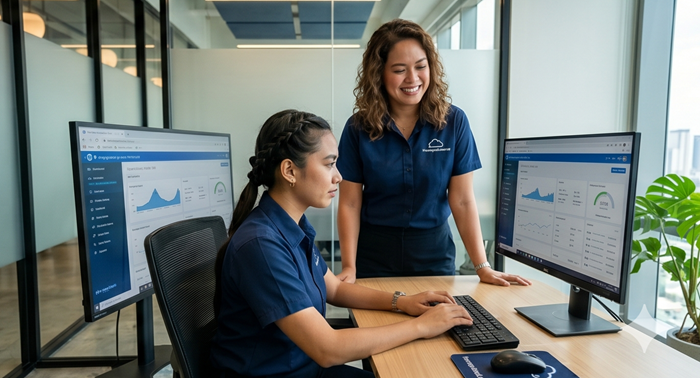
At FreeMyCloud, we connect Australian businesses with graduate accountants on our Manila team. Our team understands Australian compliance requirements, speaks your language and delivers consistent, accurate work you can rely on.
If you’re spending more time on your books than on your business, it might be time to explore what outsourced bookkeeping can do for you. Get in touch with our team to find out how we can help.
Frequently Asked Questions
Yes. There is no legal restriction on using offshore bookkeeping services in Australia. Your bookkeeper in the Philippines works within your Xero, MYOB or QuickBooks file under your supervision. BAS lodgements and tax obligations remain with you or your registered tax agent: your offshore bookkeeper prepares the work, and you or your registered agent submit it to the ATO. Reputable providers train their staff specifically on Australian compliance requirements including GST, BAS, and Single Touch Payroll.
Most Australian businesses save about 50% compared to hiring a local in-house bookkeeper. A full-time bookkeeper in Australia costs about $65,000 to $85,000 a year once super, leave and management time are added (see what a bookkeeper costs). Outsourcing the equivalent role to a qualified professional in the Philippines typically costs a fraction of that. Use our savings calculator to get a personalised estimate for your business.
Filipino bookkeeping professionals working with Australian businesses are typically trained in Xero, MYOB and QuickBooks, the same platforms used across Australia. If you need help setting up or migrating your accounting software, our accounting software set-up service can handle that too.
Security is managed at the software level: your bookkeeper accesses Xero, MYOB or QuickBooks with a specific user role that limits what they can see and do. They cannot transfer funds, change bank details, or access areas outside their assigned permissions. All data remains within your accounting software’s infrastructure, which is hosted on compliant cloud servers. You can revoke access instantly at any time.
Most FreeMyCloud clients are running within 3 business days: a 15-minute call, a matched bookkeeper, then software access, with a brief handover of any existing records. From there, your bookkeeper typically operates on a weekly or fortnightly rhythm that suits your business.
Payday Super: what changed on 1 July 2026
From 1 July 2026, superannuation must be paid with every payroll cycle rather than quarterly. Contributions need to be received by the employee’s super fund within 7 business days of the payday, not simply sent, so payroll timing and clearing house lead times matter far more than they did under the quarterly system.
Super is calculated on qualifying earnings, which covers ordinary time earnings plus commissions and salary-sacrificed amounts. Contributions that arrive late attract the super guarantee charge, which adds an administrative uplift on top of the shortfall. For employers running weekly or fortnightly payroll, this turns super from a quarterly task into a per-run one, and makes accurate pay categories in your payroll system a compliance issue rather than a tidiness one.
Talk to FreeMyCloud
Call 1300 66 88 14, or send us an enquiry and we reply within one business day.
Disclaimer: This article provides general information only and does not constitute financial, taxation or legal advice. It does not take into account your objectives, financial situation or particular needs. Rates, thresholds and obligations change; the information here is current as at 31 August 2026. Before acting on anything in this article, please speak to your accountant, registered tax agent or financial adviser.