


Last updated: 14 October 2026. Written by the FreeMyCloud team.
Checked against the ATO “Instant asset write-off for eligible businesses”, “Simpler depreciation rules for small business”, “Assets and exclusions” and “Small business pool calculations” pages on 14 October 2026.
- The instant asset write off limit is $20,000 for assets first used or installed ready for use on or after 1 July 2023.
- It is open to businesses with an aggregated turnover of less than $10 million that apply the simplified depreciation rules.
- The whole cost of the asset must be under $20,000, even though the deduction itself is limited to the business portion.
- Assets that cost $20,000 or more go into the small business pool instead, at 15% in the first year and 30% after that.
- For cars, the separate car limit caps the cost that can be depreciated at $69,674 for 2025-26, the most recent year the ATO has published.
- Records behind the claim have to be kept for 5 years, including how the pool balance and the business use percentage were worked out.
The instant asset write off lets an eligible Australian business claim the business portion of an asset in one income year instead of depreciating it over several. The limit has been $20,000 since 1 July 2023, and it applies per asset, so a business can write off several assets in the same year as long as each one costs less than $20,000. The two details that catch people out are that the test applies to the full cost of the asset rather than the business portion, and that cars are subject to a separate limit entirely. This article sets out the current limit, who can use it, what happens to assets that cost more, and the records that sit behind the claim.
What is the instant asset write off, and how much can be claimed?
The instant asset write off is one component of the ATO’s simplified depreciation rules. An eligible business claims an immediate deduction for the business portion of an asset’s cost in the income year the asset is first used, or installed ready for use, rather than spreading the deduction across the asset’s effective life. According to the ATO’s instant asset write-off page, last updated 28 August 2026, the write off can be used for multiple assets, provided each individual asset costs less than the relevant limit, and it covers both new and second-hand assets.
The timing test is the date the asset was first used or installed ready for use, not the date of the invoice, so an asset ordered in June and delivered in August falls into the later income year. The cost is also more than the purchase price: the ATO’s assets and exclusions page confirms the cost includes what was paid for the asset plus any amounts spent transporting and installing it ready for use. Freight and installation therefore count towards the $20,000 test, which is a common reason a purchase that looked like it fitted does not. Coding this correctly at the point of entry is ordinary bookkeeping work, and it is much cheaper than unpicking it at year end.
For assets first used or installed ready for use on or after 1 July 2023, the instant asset write off limit is $20,000 per asset for businesses with an aggregated turnover of less than $10 million that apply the simplified depreciation rules. Source: ATO, instant asset write-off for eligible businesses, last updated 28 August 2026.
Who qualifies for the small business instant asset write off?

Eligibility for the small business instant asset write off turns on three things: aggregated turnover, whether the business applies the simplified depreciation rules, and the cost of the asset. The ATO’s simpler depreciation rules page, last updated 28 August 2026, states that a business can use the simplified depreciation rules if its aggregated turnover is less than $10 million. Aggregated turnover takes in the annual turnover of the business plus any entities that are affiliates of, or connected with, it, so a group of related companies is measured together.
The second condition is the one that is most often missed. A small business must apply the simplified depreciation rules to claim the instant asset write off, and the ATO is explicit that the entire set of rules has to be applied rather than individual elements. A business cannot take the write off on cheap assets and use the general depreciation rules on everything else. That choice affects the whole fixed asset register, which is why it belongs with the registered tax agent who prepares the return rather than in a software setting changed on a whim. FreeMyCloud provides the bookkeeping for small business that keeps the register accurate, and the agent makes the call on which rules apply.
Businesses with an aggregated turnover of $10 million or more cannot use the current write off. The higher turnover thresholds in the ATO’s second limits table, less than $50 million and less than $500 million, applied only to periods ending 30 June 2021.
What are the simplified depreciation rules, and why can only part of them not be used?
The simplified depreciation rules are the ATO’s reduced-complexity depreciation system for small business. They have two working parts: the instant asset write off for assets under the relevant limit, and the small business pool for assets at or above it. Deductions for all depreciating assets are worked out this way, except for a short list of specifically excluded assets.
The ATO’s assets and exclusions page, last updated 27 May 2026, lists the excluded assets. The general depreciation rules must be used instead for assets leased out, or expected to be leased out, for more than 50% of the time on a depreciating asset lease; assets used in research and development activities; assets allocated to a low-value pool before the business started using the simplified rules; capital works including buildings and structural improvements; horticultural plants; and software allocated to a software development pool. Everything else that declines in value over its working life, from laptops and office furniture to tools, trailers and tractors, sits inside the rules.
One timing concession is worth knowing. The “lock out” rule once stopped a small business that had opted out of the simplified rules from re-entering for 5 years. The ATO states it is suspended from 7:30 pm AEST on 12 May 2015 to 30 June 2027, so a business that left the system can currently return. Our comparison of the best accounting software in Australia covers how each package handles fixed assets.
What is the instant asset write off 2026 limit, and how does it compare with earlier years?
The instant asset write off 2026 position is straightforward: the limit is $20,000, and it has applied to every asset first used or installed ready for use on or after 1 July 2023. The swings over the past decade are the reason so much stale advice is still circulating online.
| When the asset was first used or installed ready for use | Instant asset write off limit |
|---|---|
| On or after 1 July 2023 | $20,000 |
| 12 March 2020 to 30 June 2021, if purchased on or after 7:30 pm AEST on 12 May 2015 and by 31 December 2020 | $150,000 |
| 7:30 pm AEDT on 2 April 2019 to 11 March 2020 | $30,000 |
| 29 January 2019 to before 7:30 pm AEDT on 2 April 2019 | $25,000 |
| 1 July 2016 to 28 January 2019 | $20,000 |
Limits for businesses with an aggregated turnover of less than $10 million that apply the simplified depreciation rules. Source: ATO, instant asset write-off for eligible businesses, last updated 28 August 2026. The ATO notes that for the 2020-21, 2021-22 and 2022-23 income years, temporary full expensing may apply instead.
Was the instant asset write off 2025 limit different?
No. The instant asset write off 2025 limit was the same $20,000, because the current limit has run continuously since 1 July 2023 and covers the 2023-24, 2024-25 and 2025-26 income years as well as the current one. An asset bought in March 2025 and an asset bought in March 2026 are tested against the same figure. What changes between years is the car limit, which the ATO indexes annually.
How does the instant asset write off car limit work?
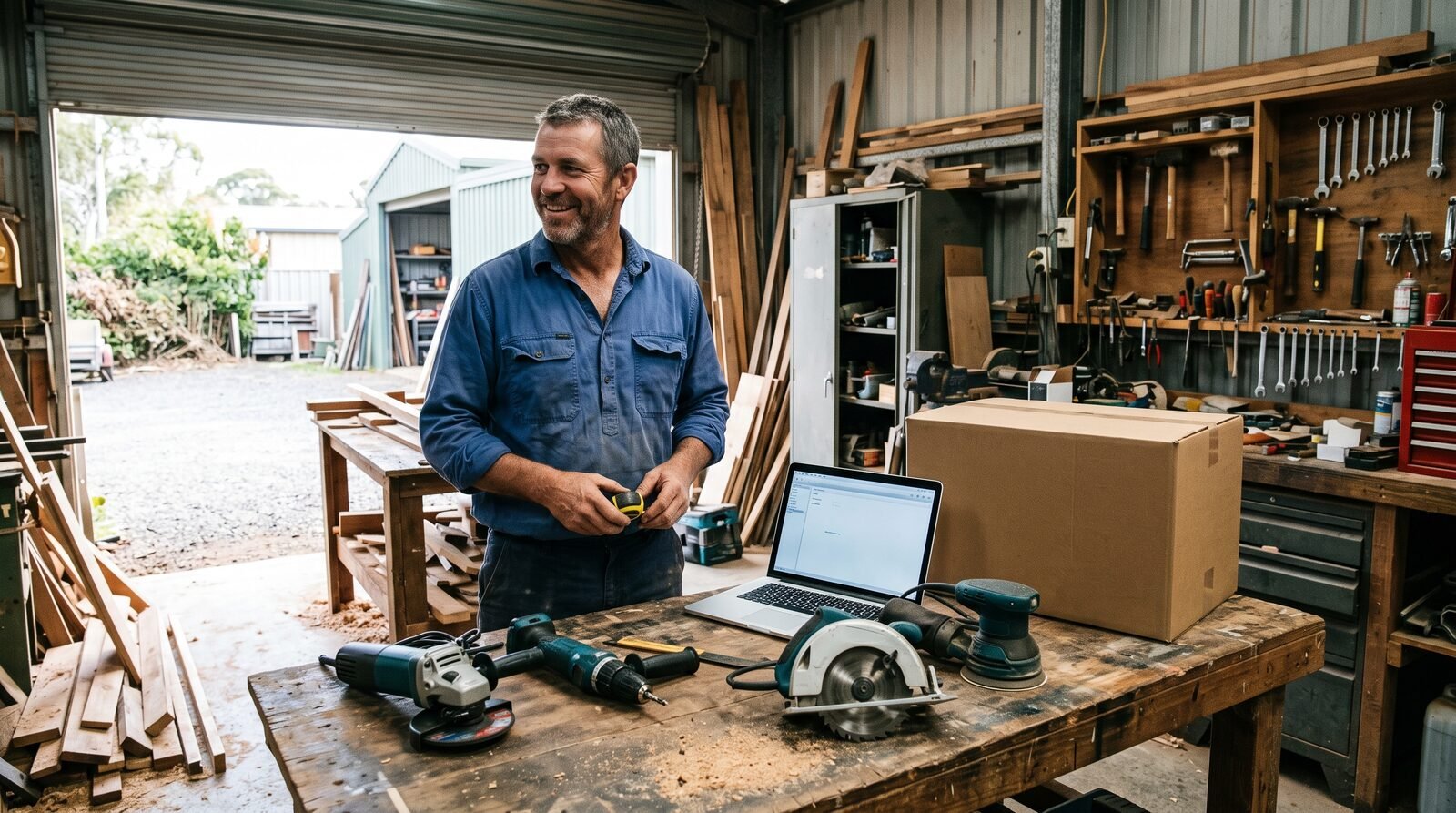
Cars get their own cap, and it sits on top of the $20,000 test rather than replacing it. The ATO defines a car for this purpose as a passenger vehicle, other than a motorcycle or similar vehicle, designed to carry a load of less than one tonne and fewer than 9 passengers. Payload capacity is the gross vehicle mass on the compliance plate less the basic kerb weight, which is why some dual-cab utes fall outside the car limit and others do not. It does not apply to vehicles modified for use by people with disability.
Where the car limit applies, it caps the cost that can be used to work out the vehicle’s decline in value, and the excess above the cap cannot be claimed under any other depreciation rule. In practice almost no car qualifies for the instant asset write off. The ATO’s worked example makes the point: a car bought for $80,000 and used 75% for business cannot be written off immediately, and the maximum depreciable amount is 75% of the car limit. Vehicle coding is a standing issue for tradies and building and construction businesses, where the ute is both a tool and an asset.
| Income year | Car limit |
|---|---|
| 2025-26 | $69,674 |
| 2024-25 | $69,674 |
| 2023-24 | $68,108 |
| 2022-23 | $64,741 |
| 2021-22 | $60,733 |
| 2020-21 | $59,136 |
Source: ATO, assets and exclusions, last updated 27 May 2026. That page does not yet publish a car limit for the 2026-27 income year, so the 2026-27 figure should be confirmed on the ATO page before it is used in a calculation.
GST interacts with the car limit in a way that surprises people. A business registered for GST that can claim a full GST credit excludes the GST from the asset’s cost when working out depreciation. Where the car limit applies, the ATO states that the maximum GST credit claimable is one eleventh of the car limit: for 2025-26 that is $69,674 divided by 11, or $6,334. A business that is not registered for GST includes the GST it paid in the asset’s cost instead. The GST side of an asset purchase is part of the same job as the quarterly lodgement, which our page on BAS and the ATO and our guide to BAS due dates for 2026-27 both cover.
What happens to small business depreciation when an asset costs more than the limit?
Assets costing $20,000 or more do not lose their deduction. Under the simplified depreciation rules the business portion goes into the small business pool. The ATO confirms a 15% deduction in the year the asset is first used or installed ready for use, regardless of the month it was bought, and 30% for each year after that.
The test that decides which side of the line an asset falls on is the full cost, not the business portion. The ATO’s worked example is a ute bought for $40,000 and used 40% for business. The cost to the business is $16,000, under the limit, but the write off is not available because the total cost of $40,000 exceeds $20,000. The $16,000 goes into the pool. Trade-ins work the same way: the ATO treats a trade-in as two transactions and tests the cost before the credit.
An asset’s entire cost must be less than $20,000 for the instant asset write off to be available, even though the deduction itself is limited to the business use portion. A $25,000 asset used wholly for business goes into the pool; a $19,000 asset used half for business gives a $9,500 deduction. Source: ATO, instant asset write-off for eligible businesses.
How do depreciation small business pools work at year end?
The pool has a useful feature at the bottom end. The ATO’s small business pool calculations page states that if the pool balance, after adjusting for acquisitions and disposals but before applying the depreciation deductions, is less than the instant asset write off limit, the entire pool balance can be written off as a deduction in that year. A pool that has shrunk below $20,000 can be cleared out rather than carried forward at 30% a year indefinitely.
Business use is not set and forgotten either. The ATO requires the taxable use proportion to be reviewed in each of the first 3 years after the year an asset was added to the pool, and an adjustment to the opening pool balance where that proportion changes by more than 10% from the most recent estimate. That is a recurring task that belongs in a month-end routine alongside accounts receivable and payable and the management reports that come out of it.
How does temporary full expensing differ from the instant asset write off?
Temporary full expensing was a separate, broader measure that ran for a defined window and has since ended. For assets a business started to hold and first used, or had installed ready for use, for a taxable purpose from 7:30 pm AEDT on 6 October 2020 to 30 June 2023, the ATO states that the instant asset write off limit did not apply: the business portion of the asset’s cost was immediately deductible under temporary full expensing with no cost cap at all. Businesses using simplified depreciation also deducted the whole pool balance at the end of income years ending in that window.
That window closed on 30 June 2023, exactly when the current $20,000 limit took over, so any article describing an uncapped write off is describing the old measure. A pool opened under temporary full expensing may already be at zero, while assets bought from 1 July 2023 onwards are tested against $20,000 one at a time. Businesses operating as individual operators and contractors are the most likely to still be working from the older figures.
What records sit behind an instant asset write off claim?

The ATO is direct about record keeping. Its simpler depreciation page notes that bookkeeping systems generally calculate depreciation, but that the right settings have to be chosen to apply the simplified rules. It then requires records to be kept for 5 years covering how the opening pool balance was worked out, any change in business use, and any assets disposed of.
In practice an asset purchase needs more than a bank feed match. The table below sets out what a supportable claim looks like in the ledger. Whether the file sits in Xero or MYOB, the register has to carry the date the asset was ready for use, the full cost including freight and installation, the GST treatment and the business use percentage.
| What to record | Why it matters |
|---|---|
| Date first used or installed ready for use | Sets the income year and therefore the limit that applies |
| Full cost, including freight and installation | This is the figure tested against $20,000, not the invoice subtotal |
| Trade-in credit, shown separately | The ATO treats a trade-in as two transactions and tests the cost before the credit |
| GST treatment and credit claimed | A registered business excludes claimable GST from the asset cost |
| Business use percentage and how it was estimated | Caps the deduction, and must be reviewed for 3 years once pooled |
| Opening pool balance workings and disposals | Required to be kept for 5 years under the ATO record-keeping rules |
None of this is difficult, but it tends to be left until the return is being prepared, by which point the delivery docket has gone. Keeping the register current through the year, against the ATO due dates that already drive the calendar, is the cheapest version of the job. FreeMyCloud has been doing this kind of outsourced bookkeeping and accounting for Australian businesses since 2010, with university-qualified graduate accountants based in the Philippines working in the client’s own file during Australian business hours.
Keeping the asset register straight through the year
FreeMyCloud places university-qualified graduate accountants based in the Philippines with Australian businesses, from individual operators to ASX-listed companies, at about 50% less than employing a bookkeeper locally.
Or call 1300 66 88 14, or try the savings calculator. No lock-in contracts, no setup fees.
Frequently asked questions
Is the instant write off the same as getting the money back?
No. The instant write off is a deduction, not a refund. It reduces taxable income by the business portion of the asset’s cost in that income year, so the cash benefit is the tax that would otherwise have been paid on that amount. A business with no taxable income to reduce gets no immediate cash benefit from the deduction at all. How it affects a particular return is a question for the registered tax agent who prepares it.
Can the instant asset write off be claimed on a second-hand asset?
Yes. The ATO states that the instant asset write off can be used for both new and second-hand assets, as long as the asset costs less than the relevant limit and is not one of the assets excluded from the simplified depreciation rules. A second-hand excavator bought for $18,000 is tested the same way as a new one. The usual conditions still apply, including the full cost test and the business use portion.
How does GST affect the instant asset write off threshold?
It can move an asset from one side of the line to the other. A business registered for GST that can claim a full GST credit excludes the GST amount from the asset’s cost, so an asset invoiced at $21,500 including GST has a cost of about $19,545 and may fall under the limit. A business not registered for GST includes the GST it paid in the cost, so the same invoice does not fit.
What happens if the asset is used partly for private purposes?
The full cost of the asset still has to be under $20,000 for the write off to be available, but the deduction is limited to the business use portion. The ATO’s example is a computer bought for $6,800 and used 80% for business, giving a deduction of $5,440. The private portion is never deductible, and the basis for the percentage needs to be recorded.
Can a business claim the instant asset write off if its turnover is over $10 million?
Not under the current rules. The write off is available to businesses with an aggregated turnover of less than $10 million that apply the simplified depreciation rules. The higher turnover thresholds the ATO published, less than $50 million and less than $500 million, applied only to historical periods ending 30 June 2021. Larger businesses use the general depreciation rules instead.
Does an asset bought on finance qualify for the instant asset write off?
The ATO’s eligibility conditions turn on aggregated turnover, the date the asset was purchased, when it was first used or installed ready for use, and whether the cost is under the limit. How the purchase was funded is not one of those four conditions. The interest component of a finance arrangement is dealt with separately from the asset’s cost, so the structure of a specific agreement is worth confirming with a registered tax agent.
This article is general information about Australian bookkeeping and reporting obligations, current as at 14 October 2026. It is not tax, financial or legal advice. FreeMyCloud is not a registered tax or BAS agent and does not prepare or lodge tax returns or activity statements. Rates, thresholds and dates change. Confirm your own position with your registered tax or BAS agent.